
Perimenopause Anger and Mood Changes
Perimenopause Anger and Mood Changes: What Women Should Know
Perimenopause can bring changes in periods, sleep, temperature, energy, and mood. Some women describe feeling more irritable, impatient, or unlike themselves. These experiences are real, but the phrase 'perimenopause rage' is not a diagnosis and should not be used to explain every case of anger.
Changing hormones may contribute to mood and sleep changes, while work, caregiving, relationship stress, pain, thyroid concerns, depression, anxiety, and other factors may also matter. A useful plan combines education and daily support with professional evaluation when symptoms are persistent or disruptive.
Key Takeaways
Perimenopause is the transition before menopause and can include irregular periods, hot flashes, sleep problems, and mood changes.
No single hormone can be blamed for every episode of anger.
Lifestyle habits may support well-being but do not replace individualized treatment decisions.
New, severe, or disruptive symptoms deserve a healthcare conversation.
What Is Perimenopause?
Perimenopause is the time leading up to menopause. Menopause is reached after 12 months without a menstrual period. During the transition, periods may become less predictable, and women may experience hot flashes, night sweats, sleep problems, vaginal changes, or shifts in mood.
The National Institute on Aging notes that women may feel moodier or more irritable around menopause. Experiences vary widely. Some women have mild symptoms, while others find that sleep, work, relationships, or daily function are affected.
Why Can Irritability Feel Stronger?
Changing hormone levels may affect sleep and mood. Night sweats or repeated waking can leave a woman with less emotional margin the next day. At the same time, midlife may include work pressure, care for children or aging parents, relationship changes, and health concerns.
This is why a single-cause message is misleading. A woman can track the timing of symptoms, menstrual changes, sleep, hot flashes, medicines, alcohol, caffeine, stress, and other factors. The record can support a more informed conversation with a qualified healthcare professional.
What Everyday Support May Help?
Regular movement, consistent meals, lower evening stimulation, a cooler sleep environment, stress-management practices, and social support may help some women feel better. The Office on Women's Health encourages women to discuss bothersome symptoms with a healthcare professional because several treatment options may be available.
Wellness coaching can help a woman choose one or two realistic habits and practice them consistently. It should not promise to rebalance hormones, eliminate rage, or replace treatment. Outcomes differ, and a strong program respects those differences.
Track symptoms and cycle changes without self-diagnosing
Protect a regular sleep and wake window when possible
Choose movement that fits current health and comfort
Plan direct conversations about workload and support
Review supplements and medicines with a qualified professional
What Professional Options Might Be Discussed?
A healthcare professional may review symptoms, menstrual history, health risks, medicines, and possible alternative causes. Depending on the person, the discussion may include nonhormonal approaches, menopausal hormone therapy, mental health care, sleep support, or evaluation for another condition.
The Office on Women's Health explains that menopausal hormone therapy can help certain symptoms but also has risks. The right choice is individualized. Sarah Butler should not recommend a prescription treatment or tell a woman that a natural product is safer simply because it is natural.
When Should a Woman Ask for Help?
A woman should schedule a healthcare conversation when mood changes are new, persistent, worsening, or interfering with work, sleep, relationships, or safety. Heavy or unusual bleeding, severe pain, or other new physical symptoms also deserve professional attention.
Immediate danger, thoughts of self-harm, or loss of contact with reality require emergency help. Perimenopause should not be used to dismiss serious symptoms.
How Can Peachy Wellness Support Midlife Women?
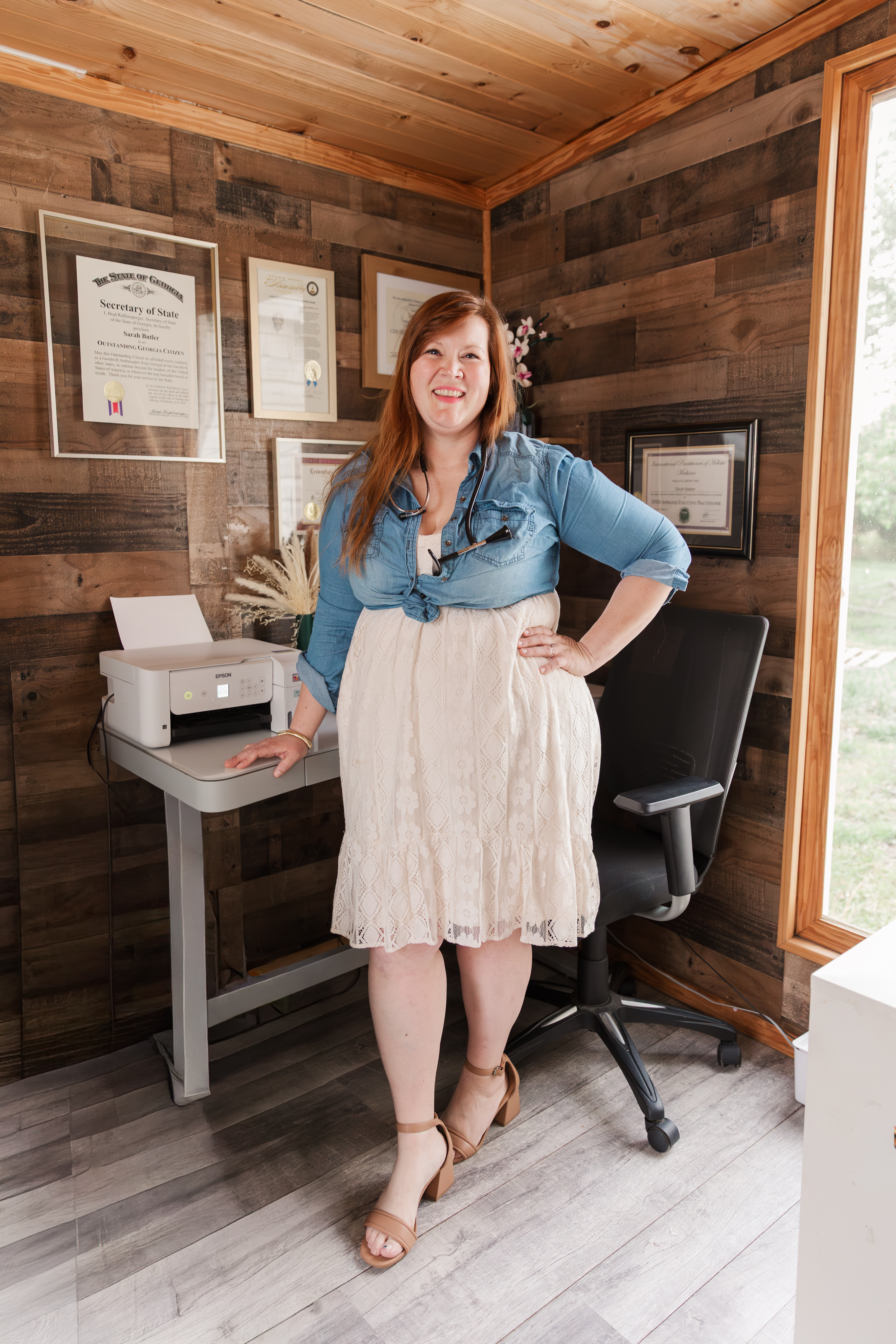
Peachy Wellness can offer education, faith-centered encouragement, community, and help implementing sustainable habits. Sarah's experience as a midwife and wellness educator can help women feel heard and prepare thoughtful questions.
What I offer is education and daily support. Working out whether this is perimenopause, reading any testing, and deciding about hormone therapy all belong with your own provider.
The hormone and wellness coaching programs at Peachy Wellness are not only for new mothers. The same foundations, blood sugar, minerals, sleep and nervous system support, matter just as much in midlife.
What Should a Woman Track Before an Appointment?
A brief record can help a healthcare professional see patterns. A woman can note cycle dates, bleeding changes, hot flashes, night sweats, sleep, mood, headaches, pain, medicines, supplements, and major stressors. She can also write down how symptoms affect work, relationships, or daily tasks.
Tracking is not self-diagnosis. It is a way to bring clearer information to a conversation. If writing every detail becomes stressful, a simple weekly summary is enough. The goal is to support individualized care, not to create another demanding wellness assignment.
Frequently Asked Questions:
What hormone causes anger in perimenopause?
There is no single hormone that explains every woman's anger. Hormone fluctuations, sleep, stress, mental health, relationships, medicines, and other health concerns may all contribute.
How long does perimenopause last?
The timeline varies. A qualified healthcare professional can help a woman understand her stage based on menstrual history, symptoms, age, and health context.
Are natural remedies always safer?
No. Supplements and herbs can cause side effects or interact with medicines. Natural does not automatically mean safe or appropriate.
Can coaching replace menopause care?
No. Coaching can support routines and education. Evaluation and treatment decisions belong with licensed healthcare professionals.
Final Thoughts
Perimenopause can affect how a woman feels, sleeps, and responds to daily stress. The most helpful message is neither dismissal nor certainty. It is permission to notice the pattern, reduce unnecessary strain, and ask for individualized care when symptoms matter.
Peachy Wellness can support the daily implementation side of wellness while keeping medical and mental health decisions with the appropriate professionals.
If you are somewhere in this and unsure what to do first, get in touch or start with an overview of everything on offer at Peachy Wellness.
Important Note
This article is for general education and support. Peachy Wellness offers wellness education, coaching, and midwifery-informed support. Sarah Butler is a midwife and wellness educator, not a physician or nurse. This information does not diagnose, treat, cure, or prevent any condition and does not replace individual care from a licensed healthcare or mental health professional. If there is immediate danger, thoughts of self-harm or harming a baby, confusion, hallucinations, or another emergency, call 911 or go to the nearest emergency room.
Sources
National Institute on Aging: What Is Menopause?
Office on Women's Health: Menopause Symptoms and Relief
Office on Women's Health: Menopause Treatment